
Cut the manual hours recruiters spend on first round screening, so hiring teams can scale headcount without scaling their recruiting headcount to match.
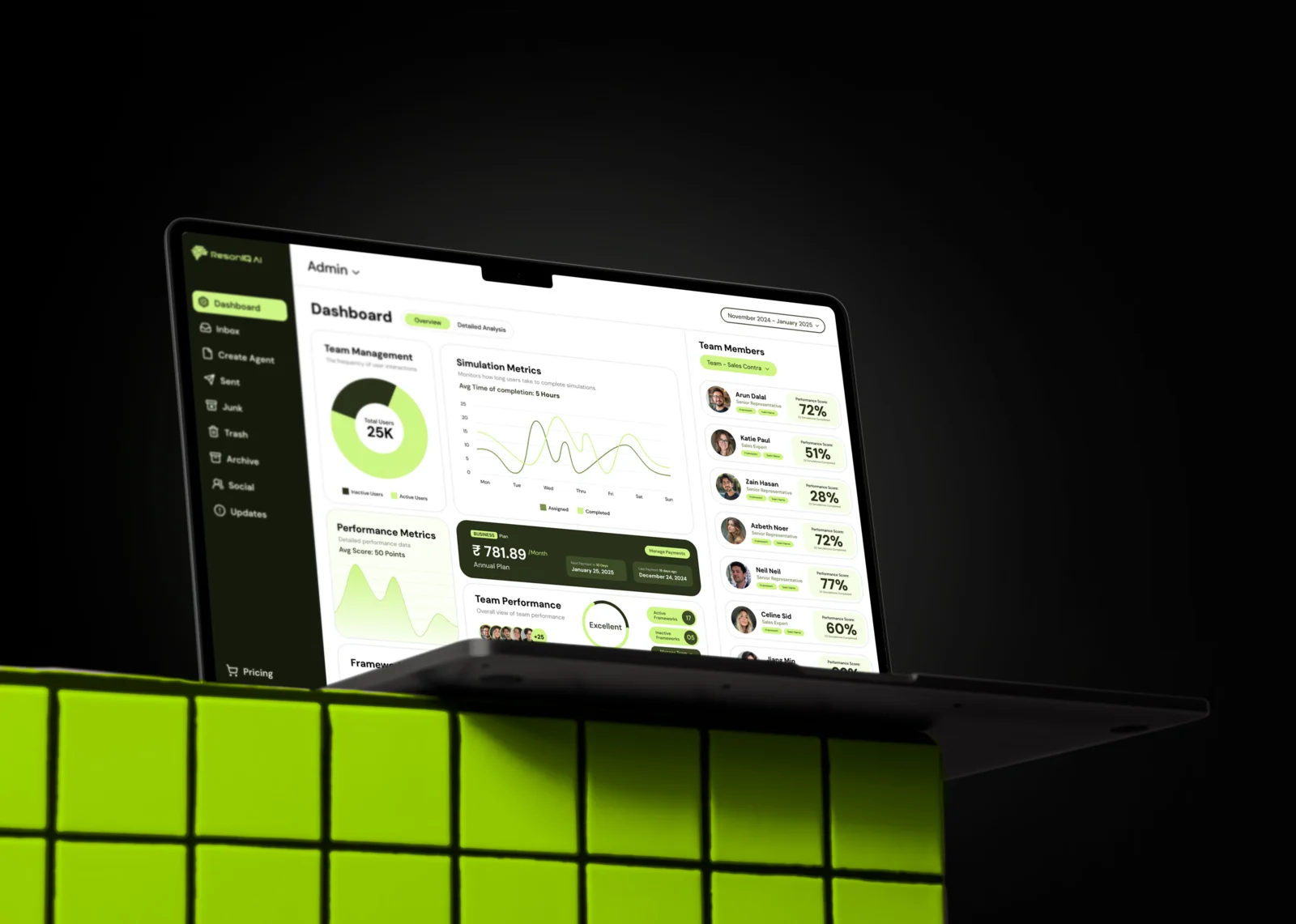
Built a hiring platform where every score explains itself.
There was no product before this — no legacy screens, no design system, no existing users to protect. I owned RoundOne from the first architecture decision: how much of the AI's reasoning would stay visible to the human making the final call.
- Manual first round screening doesn't scale — every hire starts with hundreds of résumés read by hand
- Screening tools score candidates but don't explain themselves
- Automation that can't be questioned gets abandoned the first time it's visibly wrong
- Score every résumé automatically, with a visible reasoning trail behind every number
- Run a structured, adaptive interview without a human in the room
- Keep the recruiter in control at every stage, no exceptions
Two decisions that shaped everything after them.
Campaign first, not candidate first
Recruiters define the ideal profile before a single résumé arrives — required skills, screening depth, and qualifying questions specific to the role. Every candidate is measured against that definition, not a generic template.
One link, one flow
Candidates apply through a single public link, wherever the role is posted. Form, résumé, a few qualifying questions — and if they clear the bar, a live AI interview. No scheduling back and forth.
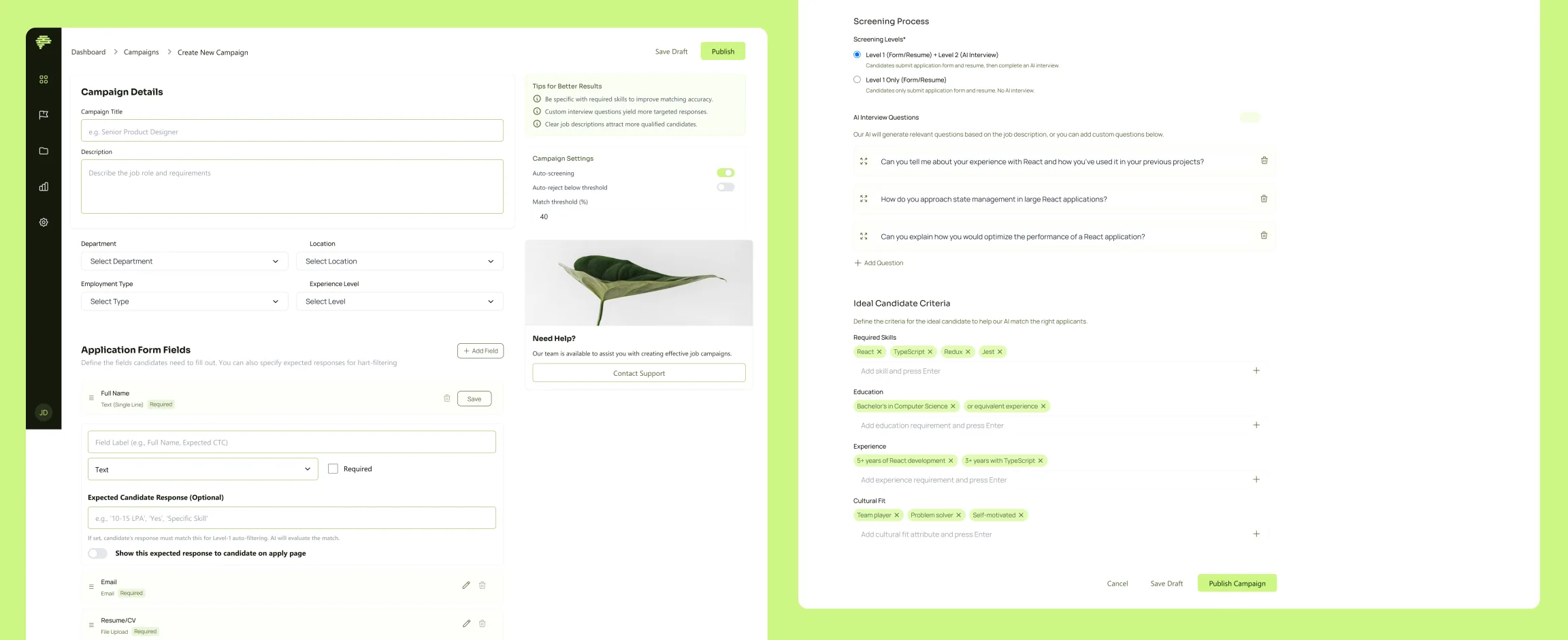
Two people move through this product at once.
A score without a reason is just a black box.
The résumé engine doesn't stop at a match percentage — every score carries the reasoning behind it. An 85% match shows exactly which skills lined up; a 25% match shows what was missing, so a recruiter can pull a low scorer back into consideration instead of trusting a single number.
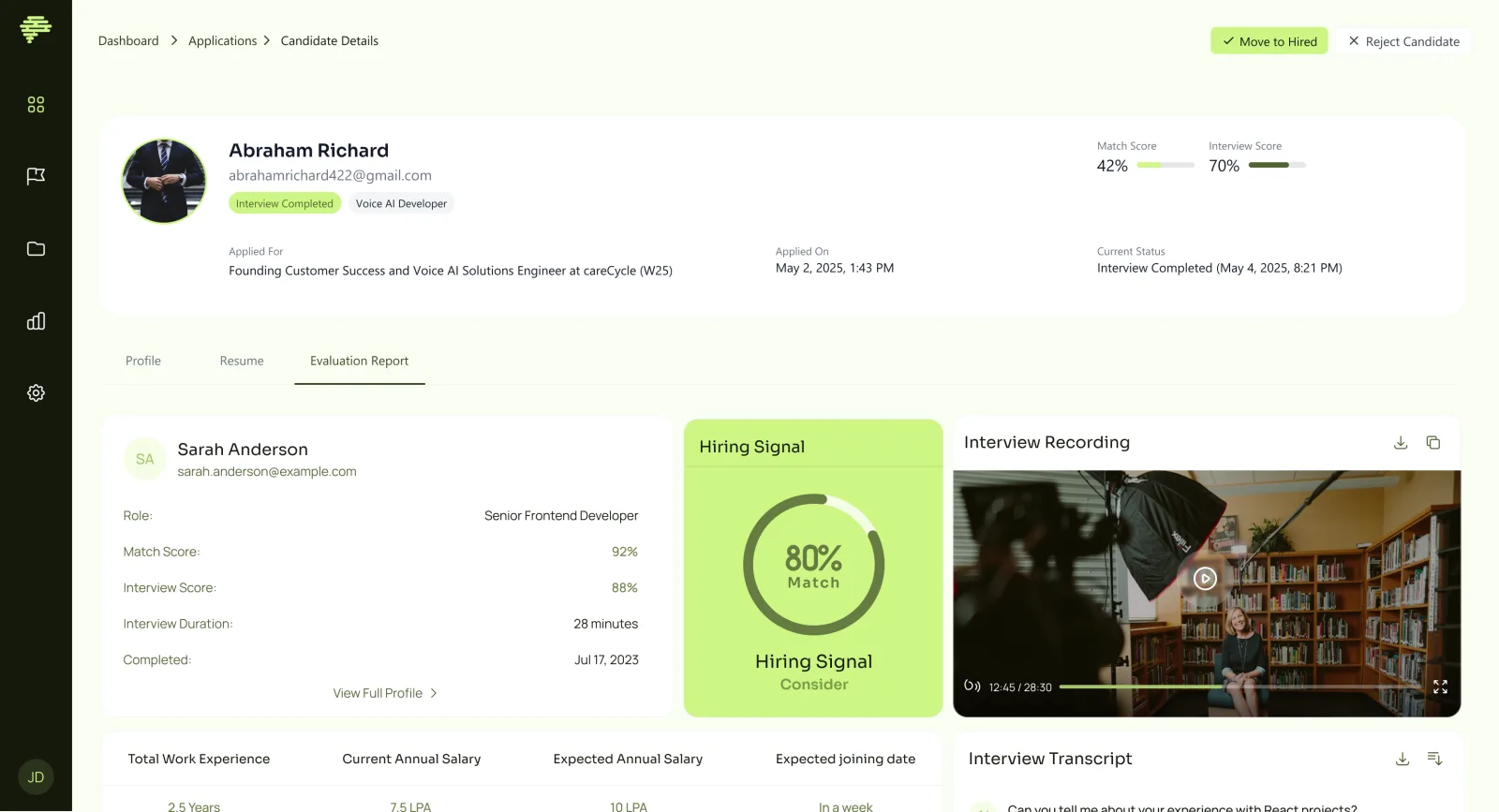
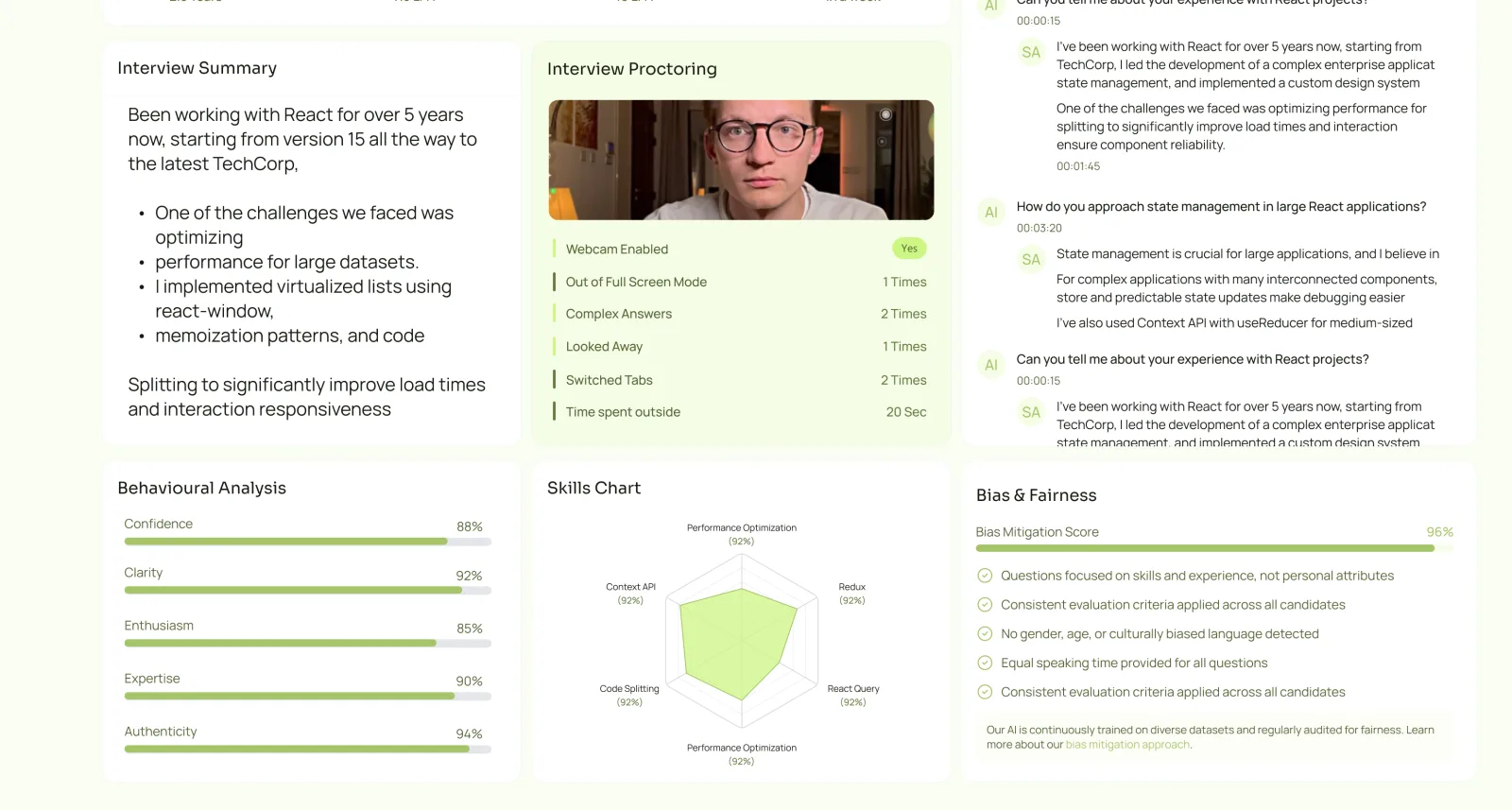
People trust their own judgment over an algorithm's the moment they see it be wrong once.
RoundOne's scoring was designed around this directly — the reasoning trail and the recruiter's standing override aren't polish, they're what keeps the tool in use after the first wrong score, instead of getting quietly abandoned like every other black box screening tool before it.
An interview that adapts, not a script that repeats.
RoundOne runs a live AI interview grounded in the candidate's own résumé, not a fixed question bank — it asks for specifics, pushes on vague answers, and adjusts its next question to what was just said. It hands back more than a transcript: a plain language writeup alongside the full recording, so the reviewer sees exactly what the AI saw.
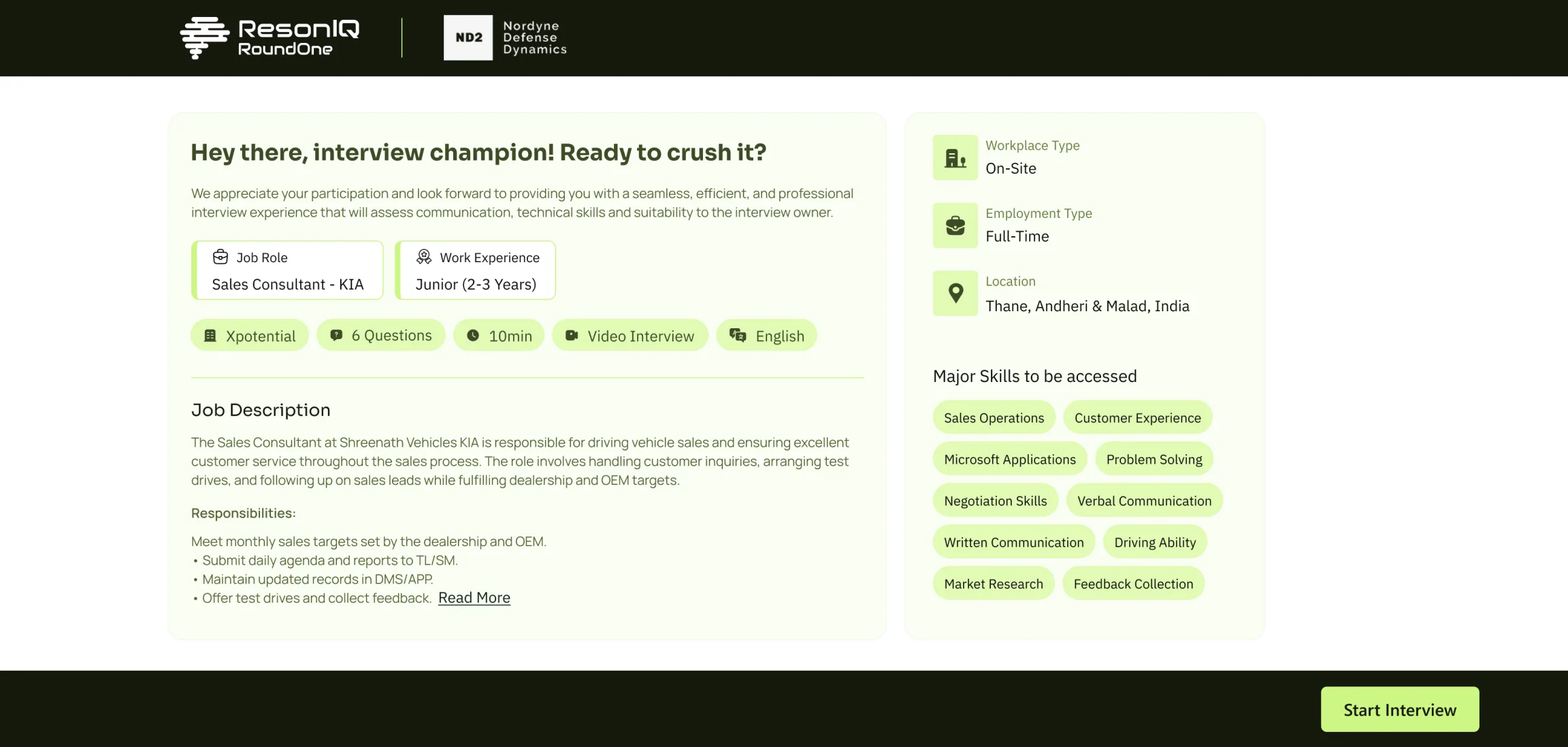
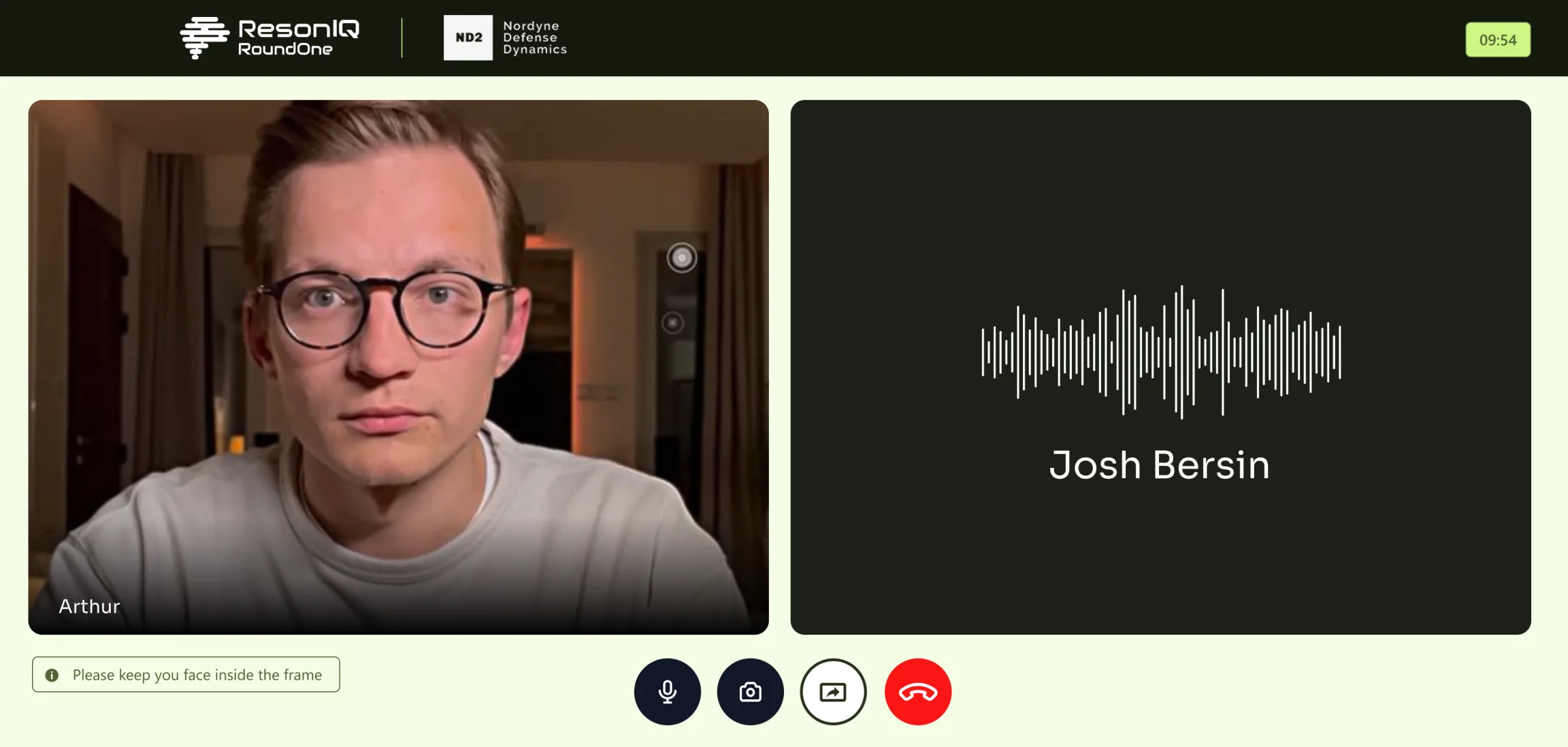
What changed on each side of the funnel.
- Every AI decision comes with a visible reason
- Full override control at every stage
- One dashboard replaces manual pipeline tracking
- One link from job post to application, no scheduling friction
- An interview that responds to what they actually said
- Two connected surfaces shipped from zero
- Architecture and IA defined from a blank canvas
The hardest part wasn't the AI's intelligence — it was designing restraint into it. Visible enough to trust, brief enough to use: that balance is the real design problem here.